It's the question every patient asks eventually — usually right after they've read something promising online. Here's the honest answer, including the parts that aren't as flattering as the marketing.
Dr. William Greenlee
Neuropathy & Nerve Pain Specialist
Red light therapy — also called photobiomodulation — has become one of the most talked-about treatments for nerve pain. Clinics promote it, home devices sell by the thousands, and the language around it often gets ahead of what the evidence actually supports.
So let's answer the headline question directly: no, red light therapy does not cure neuropathy, and it cannot fully reverse established nerve damage. Any clinic or product claiming otherwise is overpromising.
That said, "doesn't cure" is not the same as "doesn't work," and the distinction matters enormously for anyone trying to make a sensible decision. There's a real, defensible middle ground here — and most of what's confusing about red light therapy comes from people arguing at the two extremes.
This article works through that middle ground: what the treatment genuinely does, how long results take, how sessions are spaced, whether it's safe for diabetic nerve pain, and whether it should ever replace your medication.
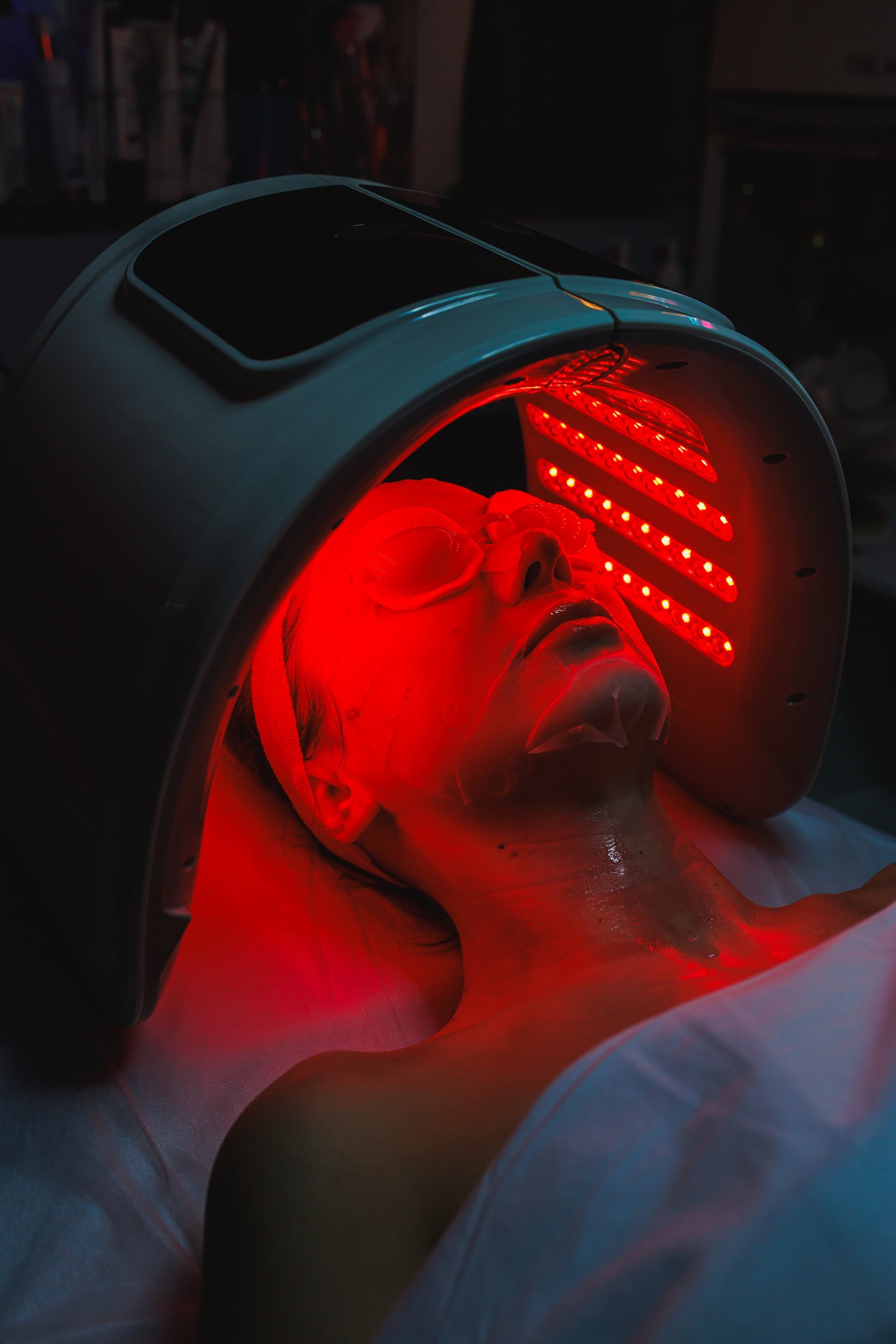
Red and near-infrared light at specific wavelengths penetrates below the skin and is absorbed by the mitochondria — the energy-producing structures inside your cells. This absorption appears to support cellular energy production, reduce oxidative stress, and calm inflammation in the treated tissue.
Applied to neuropathy, that means it's working on the environment around your nerves. Better blood flow, less inflammation, more usable energy at the cellular level. Nerves that are chronically starved and irritated have a hard time functioning well; improve those conditions and function tends to improve with them.
What it isn't doing is regrowing nerves or erasing damage that's already occurred. Think of it less like repairing a cut wire and more like giving a struggling system the conditions it needs to work better with what it still has.
For a deeper look at the mechanism, our article on how red light therapy helps relieve neuropathy pain covers it in more detail, and the red light therapy treatment page outlines our clinical protocol.
It helps to be precise about these words, because they get used loosely.
A cure would mean the condition is eliminated and doesn't return — no ongoing treatment, no recurrence. Nothing currently does this for peripheral neuropathy, red light therapy included. The underlying causes — diabetes, circulation problems, compression, medication side effects — don't disappear because you sat under a light panel.
Reversal would mean damaged nerve fibers are restored to their original state. Nerves do have some capacity to regenerate, but that capacity is limited and slow, and significant structural damage is generally permanent. Red light therapy may support the conditions for whatever repair is possible, but it isn't rebuilding lost fibers.
Here's the thing, though. Patients rarely use these words in a strictly medical sense. What they usually mean is: "Can I feel meaningfully better? Can I get back to things I've stopped doing? Will this stop getting worse?"
Those are the right questions, and the answers are more encouraging than the clinical verdict sounds. Numbness can ease. Burning can calm. Sleep can improve. Function can be preserved or regained. That's not a cure — but for someone who hasn't slept properly in months, it's a substantial outcome.
Neuropathy is best understood as a process rather than a fixed state. It can get worse, hold steady, or improve. Red light therapy is a tool for pushing that process in a better direction — alongside everything else in your plan. It rarely changes things dramatically on its own, but it's frequently a meaningful contributor.
These are the questions that come up in almost every consultation. Here are straight answers.
It depends what you mean by "results," and being clear about that prevents a lot of disappointment.
Immediate effects — some patients notice warmth, a slight tingling, or a settling sensation in the treated area right after a session. This is mild and often temporary. It's a decent sign the tissue is responding, but it isn't the outcome you're after.
Early changes — typically two to four weeks in, patients start reporting that sleep is somewhat less disrupted, or that burning is a little less intense at night. These changes are usually subtle at first and easy to miss if you aren't tracking them.
Meaningful change — most of what we'd call real improvement shows up between six and twelve weeks of consistent treatment. Sensation, comfort, and tolerance for standing or walking tend to shift in this window.
A caveat worth stating: everyone's timeline is different, and severity at the start matters a great deal. Someone with mild symptoms of two years' duration usually responds faster than someone with advanced neuropathy of fifteen years.
Consistency matters more than total time, which is why schedule design is genuinely important. The pattern we generally follow:
Session length in our clinic is typically a short, focused block — long enough to be effective, not so long that it becomes a scheduling burden you'll abandon. Speaking of which: the most common reason home devices fail isn't that they're ineffective, it's that people stop using them after a few weeks.
Yes, red light therapy is generally considered safe for diabetic peripheral neuropathy, and it's one of the more commonly used drug-free options for it. It's non-invasive, doesn't involve medication, and has a low side-effect profile.
But "safe" deserves some nuance when diabetes is involved, for two reasons. First, reduced sensation works both ways — if you can't feel your feet well, you may not notice if the device is positioned too close or a session is running too long. Second, diabetic skin heals slowly, so any minor issue is more consequential than it would be otherwise.
This is exactly why supervision matters. In a clinical setting, intensity and positioning are managed for you and checked against how your skin is responding. If you're using a home device with diabetes, have a clinician look at your feet first and show you correct placement and safe settings.
One more important point: red light therapy does nothing to address blood sugar. If glucose is poorly controlled, that's the dominant factor in your nerve health and needs attention alongside any treatment we provide. Our diabetic neuropathy treatment page covers how we approach that combination.
No — and this is where we're most direct with patients, because the stakes are real. Red light therapy is not a substitute for prescribed medication.
Medications like gabapentin, pregabalin, and duloxetine work on nerve signaling in ways that light therapy doesn't replicate. For some patients they're the difference between functioning and not. Abruptly stopping them can cause genuine harm, and several require careful tapering.
What can happen, over time and under medical supervision, is that a patient's overall symptom burden drops enough that their prescriber chooses to adjust a dose. That's a conversation between you and the prescriber — not something to attempt on your own, and not something we'd ever promise in advance.
The right way to think about it: red light therapy is one component of a plan that may also include medication. Our goal is to add benefit, not to take away something that's helping you.
To return to the question we opened with: no, it cannot cure or fully reverse neuropathy. The underlying causes remain, and significant nerve damage is generally permanent.
What it can do is support nerve function by improving the conditions nerves depend on — circulation, inflammation, and cellular energy. Many patients experience reduced burning and tingling, better sleep, warmer feet, and improved tolerance for activity. Some describe regaining sensation they'd assumed was gone for good; others see more modest change.
If you're looking for a cure, you'll be disappointed, and we'd rather say so plainly than let you find out later. If you're looking for a well-tolerated treatment that can meaningfully reduce symptoms and support function as part of a broader plan, it's a reasonable option worth discussing.
For a wider view of how these treatments fit together, see our article on the best treatments for numbness and tingling in the legs and feet and the overview of drug-free approaches to chronic nerve pain.
Red light therapy targets one part of the neuropathy picture: cellular health and inflammation. It doesn't improve venous return, calm overactive pain signaling directly, or relieve a compressed nerve root. Those need different tools.
That's why we rarely use it alone. In practice, it pairs naturally with three other approaches:
Improves circulation and clears fluid so treated tissue gets better blood supply in the first place.
Learn moreDirectly calms overactive pain signaling — the piece light therapy doesn't address.
Learn moreRe-engages the muscle pump for circulation benefits without the foot pain of walking.
Learn moreIf a compressed nerve root is part of the problem, this addresses the upstream cause.
Learn moreImprove the blood supply, support cellular repair, calm the pain signal, and address any structural pinch. That's a plan that makes biological sense — which is why combination care consistently outperforms any single treatment used in isolation.
Because red light therapy attracts so much hype, it helps to know what responsible positioning looks like. These are phrases and practices that should give you pause.
"Cures neuropathy." No treatment does. This is the clearest sign you're dealing with marketing rather than medicine.
"Stop your medication immediately." This is genuinely dangerous advice. No legitimate provider tells you to discontinue a prescription without coordinating with your prescriber.
"Guaranteed results." Response varies widely between patients. Anyone guaranteeing an outcome before assessing you is guessing.
No evaluation before treatment. If someone will treat you without examining you or asking about your history, they can't know whether it's appropriate.
Wavelengths and dosing never mentioned. Light therapy depends entirely on wavelength, power density, and dose. If these aren't specified, nobody is being precise about what you're getting.
We are a peripheral neuropathy clinic in Southlake, Texas, and we take a particular approach to claims like the ones discussed above. We don't promise cures. We don't tell patients to stop their medication. What we do is evaluate carefully, build a plan that makes sense for your specific situation, and tell you honestly what we think is realistic.
Care is led by Dr. William Greenlee and organized around three principles: find the actual driver of your symptoms, combine therapies deliberately rather than relying on any single approach, and measure progress honestly so we know when to continue and when to change course.
If you're weighing whether red light therapy is worth trying, that's a conversation we're happy to have — including the possibility that it isn't the best fit for you. You can read about our broader approach on the peripheral neuropathy treatment page, explore neuropathy treatment in Southlake, TX, or review all of our nerve pain relief options.
A focused evaluation at our Southlake clinic tells us what's driving your symptoms — and whether light therapy belongs in your treatment, or whether something else should come first.
771 Southlake Blvd., Suite 123 · Southlake, TX · Mon–Thu 8AM–6PM
Related pages and articles to help you go deeper.
How light therapy relieves nerve pain at the cellular level.
Our full clinical protocol, benefits, and what to expect.
What actually treats numbness and tingling — and why combination wins.
How we approach nerve pain when diabetes is part of the picture.
The non-surgical options that help patients find lasting relief.
Symptoms, causes, diagnosis, and treatment in Southlake, TX.