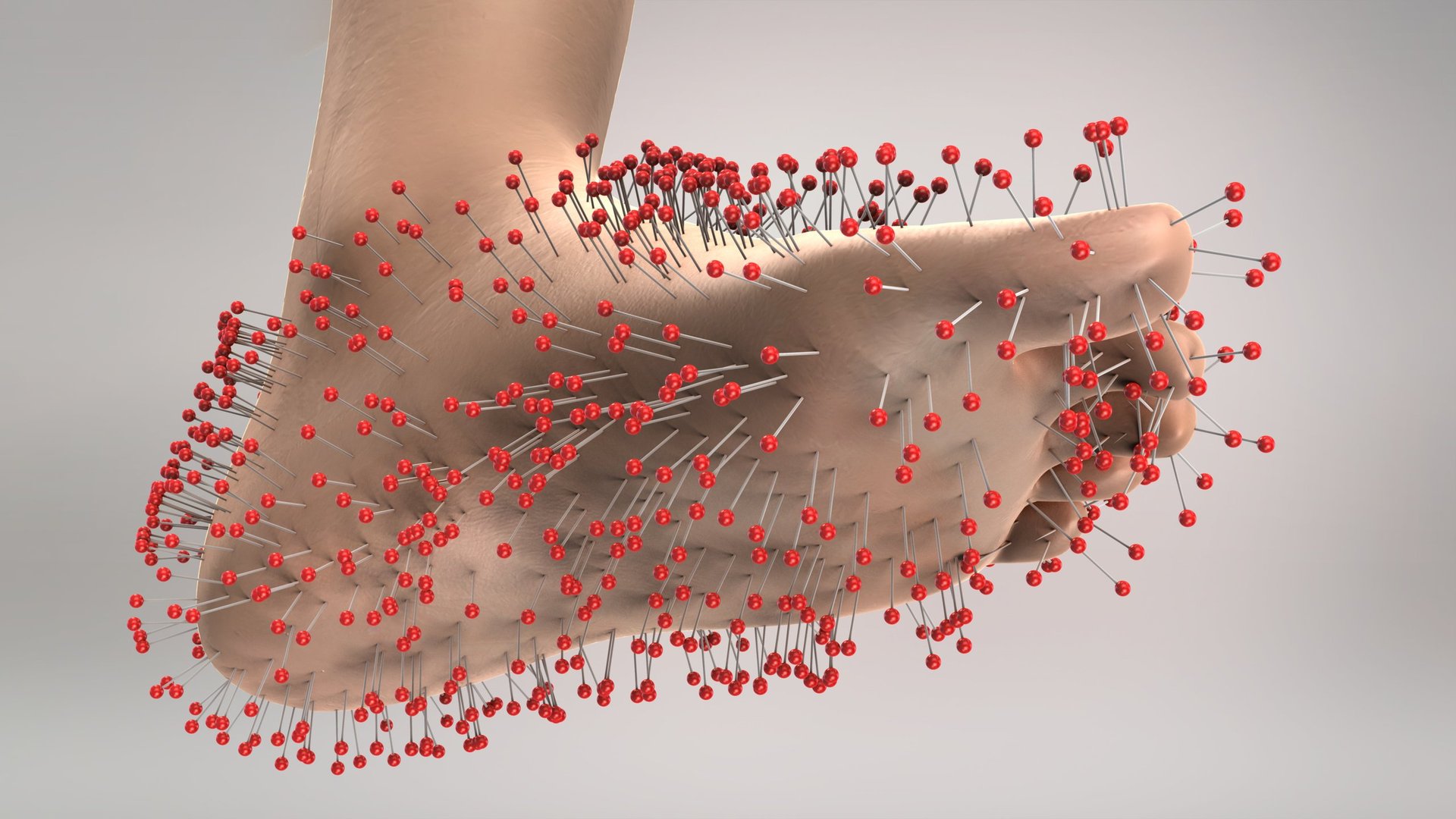
Numbness doesn't announce itself. It creeps in as a sock that won't come off, a foot that feels slightly "asleep," a spot you can't quite locate. What you do in the first year matters enormously.
Dr. William Greenlee
Neuropathy & Nerve Pain Specialist
Numbness and tingling in the legs and feet is one of the most common complaints we hear, and one of the most commonly dismissed. Patients are told it's a vitamin deficiency, or their shoes, or just something that happens after fifty. Sometimes that's true. Often it isn't.
Here's why we take it seriously: numbness is rarely the beginning. By the time you can't feel your toes properly, nerve damage has usually been developing quietly for years. The sensation changes are the moment the process becomes noticeable — not the moment it started.
That timing matters for treatment. Nerves have limited regenerative capacity, and they don't recover on their own schedule. What you do early tends to determine what's still possible later.
What follows is a genuinely practical guide to the treatments that work for numbness and tingling — what each one does, who it suits, where the evidence sits, and how they're best combined. It's organized the way we actually think about it clinically, not the way it's usually marketed.
"Numbness and tingling" describes a sensation, not a diagnosis. The pattern of your symptoms is often the most useful clue we have, and it points toward very different underlying problems. Two patients can describe almost identical feelings and need completely different treatment.
A few distinctions we pay close attention to:
Our article on the five early warning signs of neuropathy walks through this in more detail. If any of the above sounds familiar, the evaluation process for peripheral neuropathy is a good next read.
We should address this honestly, because it's where most patients start. Medications used for nerve pain — gabapentin, pregabalin, duloxetine, certain antidepressants — are genuinely useful for some people. They can meaningfully reduce the burning and the electric-shock sensations that make sleep impossible.
What they generally don't do is address the underlying cause. They change how your nervous system interprets signals. They don't repair damaged nerves, improve blood supply, or reverse a metabolic problem. That's not a flaw in the drugs — it's simply what they're designed for.
It also means some patients plateau. The medication manages symptoms while the underlying process continues, and after a few years the dose that used to work doesn't anymore. Others stop because of side effects — drowsiness, dizziness, brain fog — and find themselves with no plan B.
Our position is straightforward: medication is one tool, and for some patients a genuinely valuable one. It shouldn't be the entire strategy. The treatments below can work alongside it, and over time may reduce how much you need.
An important caution: never stop or reduce a prescribed medication without talking to the prescriber first. Some of these drugs require tapering, and abrupt changes can cause real problems. Any treatment plan in our clinic is designed to work alongside your existing care, not to replace it.
Each of these targets a different part of the problem. That's the point — neuropathy is rarely caused by one thing, so it's rarely solved by one thing. Here's what each does and who it suits.
Circulation
Inflatable sleeves wrap the legs and inflate in a bottom-to-top sequence, assisting venous return and clearing fluid that pools during the day. If your feet are numb and cold or swollen, this is often where we start.
Best for: numbness paired with heaviness, coldness, or swelling. Comfortable, no downtime.
Read more about compression therapyNerve signaling
Gentle electrical currents are applied to calm overactive pain signaling and, in some protocols, to re-engage nerves that have gone quiet. This is the closest drug-free analogue to what medication does — modulating how nerves transmit — without the systemic side effects.
Best for: burning, tingling, and shooting sensations, particularly when they disrupt sleep.
Read more about electric stimulationCellular repair
Specific red and near-infrared wavelengths penetrate beneath the skin and are absorbed by cells, supporting energy production and reducing inflammation. It doesn't mask symptoms — it tries to improve the environment nerves need to function.
Best for: supporting repair over time, especially when symptoms have been present for a while.
Read more about red light therapyMovement & balance
Standing on an oscillating platform triggers rapid micro-contractions that re-engage the muscle pump and stimulate blood vessel walls to widen. It delivers circulation benefits without the foot pain that walking can cause — and it doubles as balance training.
Best for: patients who can't exercise comfortably, and those concerned about fall risk.
Read more about vibration plate therapyNerve root
If numbness runs down one leg or follows a dermatome pattern, the problem may be a compressed nerve root in the spine — not the peripheral nerves at all. Decompression creates space and reduces pressure on that root.
Best for: one-sided symptoms, symptoms that track a specific path down the leg, or coexisting back pain.
Read more about spinal decompressionYou can see how we combine these on the nerve pain relief page, or review each individual therapy in our treatments overview.
We'd be doing you a disservice to skip this. No clinic treatment — ours included — outperforms the basics when the basics are neglected. These aren't extras. They're the conditions under which everything else works.
If diabetes is driving your neuropathy, nothing we do will outrun persistently high glucose. This is the single highest-leverage factor for most patients.
Walking remains one of the best circulation therapies available and it's free. When pain prevents it, that's a problem we need to solve.
Smoking constricts blood vessels and directly worsens the circulation problem at the heart of most neuropathy. It's blunt, but it's true.
Low B12, vitamin D, and thyroid issues can all produce neuropathic symptoms. These need to be checked, not assumed — and corrected if found.
Nerve repair happens largely during sleep. Poor sleep makes symptoms worse, which makes sleep worse. Breaking that loop is a legitimate treatment goal.
If you can't feel your feet, you may not notice a cut, blister, or infection until it's serious. A two-minute look every evening prevents real complications.
Our article on daily habits that support healthy circulation covers practical routines in more depth.
If there's one conclusion worth taking from this article, it's this: the "best treatment" for numbness and tingling is rarely a single treatment. It's the right combination, sequenced for your specific situation.
Consider why. Numbness in the feet might involve reduced blood flow, damaged nerve tissue, and an overactive pain response all at once. Light therapy supports cellular repair but won't clear swelling. Compression improves circulation but won't calm a sensitized nervous system. Electric stimulation helps with signaling but doesn't repair anything. Each covers a different gap.
Stack them and the effect compounds. Improve perfusion so nutrients arrive, reduce inflammation so tissue can recover, support cellular energy so repair can occur, and calm the signaling so you can sleep through it. That's not a marketing formula — it's just how the biology works.
We are a nerve pain clinic in Southlake, Texas. Peripheral neuropathy — including the numbness and tingling that brings most people through our door — is what we do. Not a general practice that occasionally sees it, not a spa that added a light panel. This is our specialty, and it shapes every decision we make.
Care is led by Dr. William Greenlee and built around three principles. First, identify the actual driver{" "} of your symptoms — vascular, metabolic, spinal, or a combination — rather than treating a label. Second, combine therapies deliberately{" "} instead of relying on any single approach. Third, measure progress honestly and change course when something isn't working.
Patients often tell us the most valuable part is being taken seriously. They've heard "it's just aging" before. We examine, we explain what we find, and we tell you plainly what we think we can and can't improve.
Explore more on the neuropathy treatment in Southlake, TX page, read about how peripheral neuropathy is evaluated and treated, or meet our doctor and care team.
A focused evaluation at our Southlake clinic identifies what's driving your symptoms — and builds a combination plan around your specific findings rather than a generic protocol.
771 Southlake Blvd., Suite 123 · Southlake, TX · Mon–Thu 8AM–6PM
Related pages and articles to help you go deeper.
Symptoms, causes, diagnosis, and treatment in Southlake, TX.
The earliest signals of nerve trouble — and why they matter.
Why compression therapy is central to successful neuropathy care.
How light therapy relieves nerve pain at the cellular level.
How 20 minutes on a vibration plate can improve neuropathy symptoms.
Simple daily routines that keep blood flowing to the extremities.