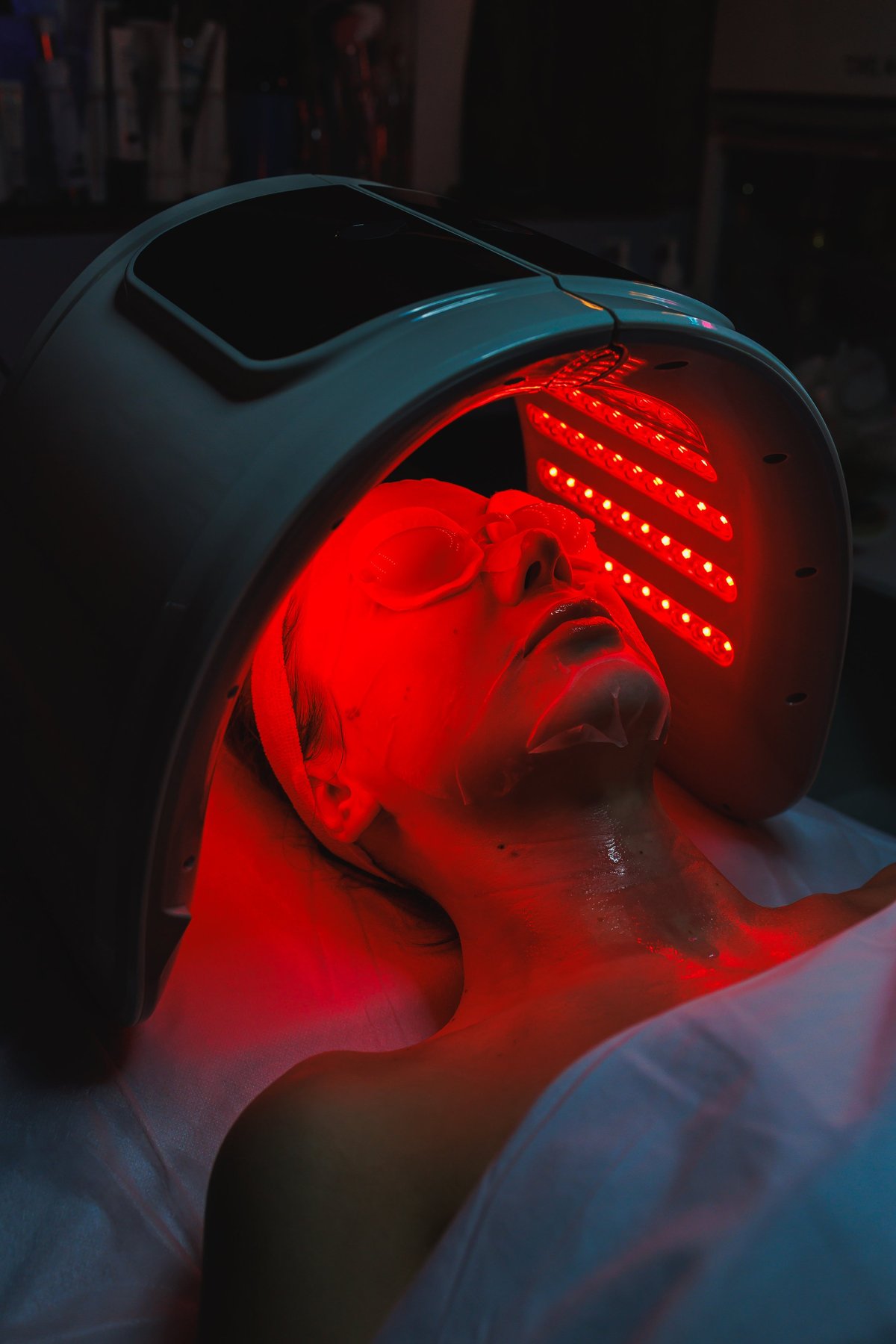
A gentle, drug-free treatment that most patients describe as relaxing — yet it works at the cellular level where nerve damage actually lives. Here's what red light therapy does for neuropathy, and what it doesn't.
Dr. William Greenlee
Neuropathy & Nerve Pain Specialist
Most neuropathy treatments ask something of you. Medications ask your body to tolerate side effects. Injections ask you to brace yourself. Surgery asks for weeks of recovery. Red light therapy asks considerably less — you sit or lie down, a panel warms the skin, and patients frequently say the hardest part is staying awake.
That gentleness is exactly why we reach for it so often in our Southlake clinic. Neuropathy involves damaged, irritated nerves, and the last thing an angry nerve needs is more aggression. Light therapy takes the opposite approach: it nudges the tissue toward its own repair rather than forcing a result.
Below is an honest look at how it works, what a session feels like, who tends to benefit most, and what kind of progress is realistic.
Red light therapy — sometimes called photobiomodulation or low-level laser therapy — uses specific wavelengths of red and near-infrared light. Unlike a laser pointer or a heat lamp, these wavelengths penetrate past the surface of the skin and reach into the tissue beneath.
The key detail is that it is not a thermal treatment. It doesn't work by warming you up. The light is absorbed by structures inside your cells, and that absorption triggers a chain of events the body already knows how to run. You are not adding anything foreign. You are essentially turning up a dimmer switch on processes that have slowed down.
Nerve pain rarely has a single cause. It is usually a mix of damaged tissue, poor blood supply, and an overexcitable nervous system. Red light therapy happens to touch several of those at once, which is why it earns a permanent spot in our treatment plans.
Light is absorbed by mitochondria — the power plants inside your cells. Damaged nerve cells that have been running on fumes get more energy to repair themselves.
Nerve tissue is heavily dependent on blood supply. Improved microcirculation means more oxygen and nutrients reaching the nerves that need them.
Chronic inflammation keeps nerves irritated and sensitized. Reducing that background noise is one reason burning and tingling often calm down first.
Overactive pain signals are part of what makes neuropathy so exhausting. Light therapy helps settle that hyperactivity rather than simply masking it.
Neuropathy affects skin integrity too. Light therapy supports the tissue around the nerves, which matters for feet prone to dryness and slow healing.
There is no pill to process and nothing added to your medication list. For patients already juggling prescriptions, that simplicity is a real benefit.
This is where red light therapy consistently surprises people. There is no numbing, no needle, and no recovery period. Most patients describe the following:
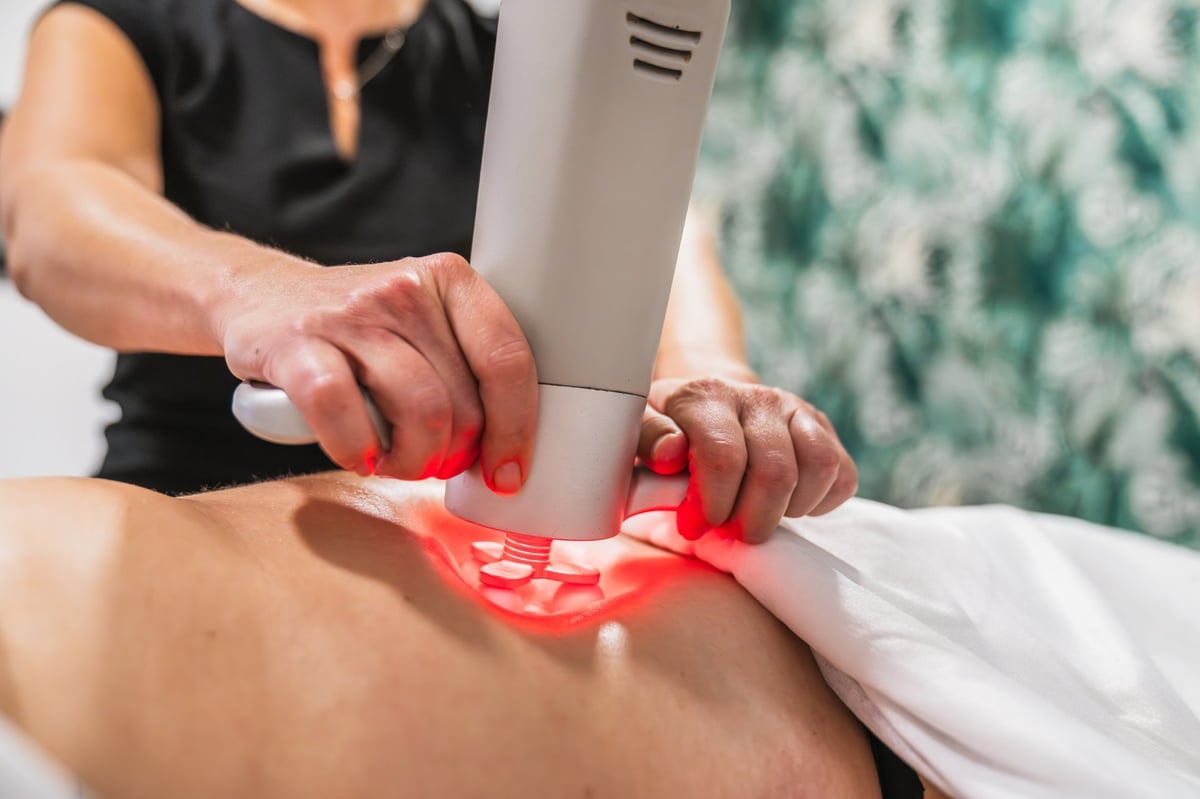
Red light therapy is not a cure for every case, and we say so plainly. It tends to work best for patients dealing with diabetic and peripheral neuropathy who experience burning, tingling, or numbness in the feet and legs. It is especially appealing for patients who have not tolerated medications well, or who simply want to reduce how much they rely on them.
You can read more about the specific conditions we address on our red light therapy treatment page.
Nerves heal slowly, and anyone promising instant results is selling something. What we typically see is that patients notice the first changes after a handful of sessions — often a softening of nighttime burning or a slightly less intense pins-and-needles feeling. Real momentum builds over weeks, not visits.
It also works best as part of a plan rather than alone. In our clinic, we often pair it with electric stimulation to calm nerve signaling, or leg compression therapy when circulation is a major factor. If spinal compression is part of the picture, spinal decompression may be added so the nerve root isn't being pinched upstream.
We are a nerve pain clinic in Southlake, Texas — not a general wellness center that happens to own a light panel. That focus matters. It means every treatment decision is made with nerve recovery in mind, and it means we've watched enough patients go through this to know what actually moves the needle.
Care is led by Dr. William Greenlee and built around three straightforward ideas. First, identify what's driving the neuropathy rather than treating a label. Second, combine therapies instead of leaning on any single approach. Third, measure progress honestly and change course if something isn't working.
You can explore our full approach on the neuropathy treatment in Southlake, TX page, or read about how peripheral neuropathy is evaluated and treated here.
A focused evaluation at our Southlake clinic tells us what's driving your symptoms — and whether light therapy, or something else entirely, is the right starting point.
771 Southlake Blvd., Suite 123 · Southlake, TX · Mon–Thu 8AM–6PM
Related pages and articles to help you go deeper.
Full details on the treatment, benefits, and what to expect.
Gentle electrical signals that calm pain and wake up quiet nerves.
Supervised compression to improve circulation and reduce swelling.
Symptoms, causes, diagnosis, and treatment in Southlake, TX.
The earliest signals of nerve trouble — and why they matter.
Dr. William Greenlee and the team behind your care.