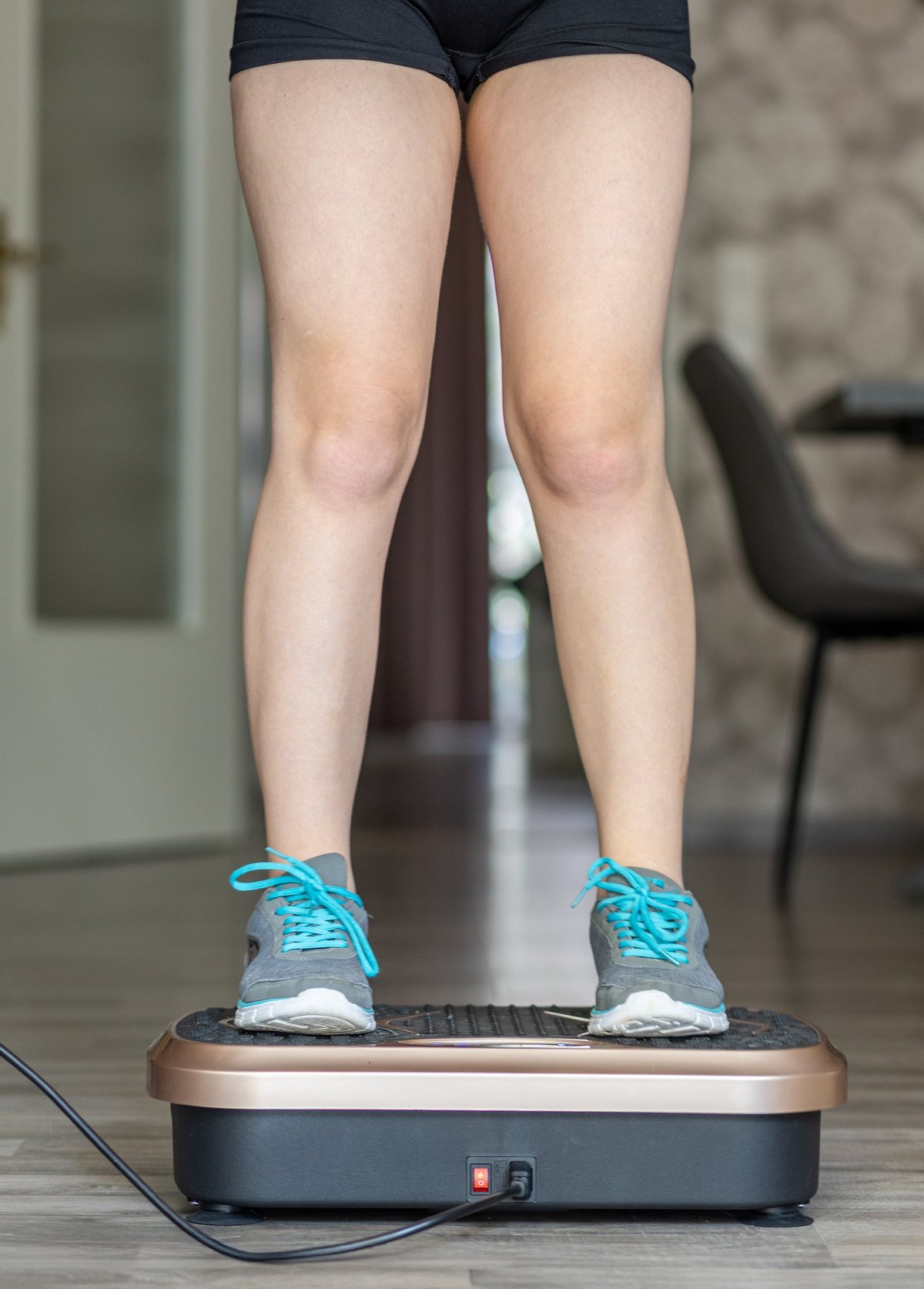
It looks like a fitness gadget. Used correctly and at the right settings, it's actually one of the simplest ways to move blood through legs that have stopped moving it well on their own.
Dr. William Greenlee
Neuropathy & Nerve Pain Specialist
Twenty minutes is not a long time. It's a lunch break. It's one episode of something you're half-watching. But twenty minutes on a vibration plate at the right frequency is enough to measurably change how blood moves through your lower legs — and for people with neuropathy, that change is the whole point.
The appeal is that it doesn't require effort in the way walking or cycling does. You stand. You hold a rail. The platform does the work. For patients whose feet hurt too much to exercise, that distinction is everything. When pain is the barrier to the very activity that would help, you need a way around the barrier.
Below is what's actually happening during those twenty minutes, how vibration supports nerve health specifically, how we build a session in our Southlake clinic, who should be cautious about it, and what kind of change is realistic.
A vibration plate produces rapid, low-amplitude oscillations — the platform moves up and down, or side to side, at a controlled frequency measured in hertz. Your body responds by constantly correcting. Tiny postural adjustments fire in your legs, ankles, and feet dozens of times per second, most of which you never consciously notice.
Those micro-contractions are the mechanism. Muscle contraction is one of the primary pumps that pushes venous blood back up the leg toward the heart. When you're sitting most of the day, that pump is largely idle. Vibration essentially re-engages it without asking you to take a single step.
There's a second effect that matters just as much: the oscillation stimulates the smooth muscle in blood vessel walls, encouraging vasodilation. Vessels that have been constricted open up. Combined with the muscular pumping, that's how twenty minutes produces a circulation effect that patients can actually feel.
Peripheral nerves are the most circulation-dependent structures in the body. They're long, metabolically hungry, and they sit at the very end of the supply line. When perfusion improves, a lot of downstream problems start to ease.
Nerve tissue needs a constant supply of oxygen and glucose. Better flow means damaged nerves finally get the raw material they need to function and repair.
Persistently cold feet are a circulation signal, not just a comfort issue. Patients routinely notice their feet feel warmer for hours after a session.
The micro-adjustments your legs make on the platform are balance training. Neuropathy raises fall risk, so this is a benefit that extends well beyond circulation.
When circulation and tissue pressure improve, the intensity of burning and pins-and-needles sensations often drops with it — sometimes noticeably.
Movement in the lower leg helps clear fluid that pools during the day. Reduced swelling takes pressure off already-irritated nerve tissue.
You get the circulatory benefits of activity without the joint impact or foot pain that walking, jogging, or cycling can cause.
If circulation is the part of your symptoms you want to understand better, our article on daily habits that support healthy circulation pairs well with this one, and the vibration plate therapy page covers our full clinical protocol.
Twenty minutes isn't one continuous vibration. Done properly, it's a structured session with variation built in — different frequencies, short rest intervals, and positions that target different areas. Here's roughly how we sequence it.
We start at a lower frequency so your body can adapt. Most people feel the vibration in their calves first. Standing with feet shoulder-width apart is standard, hands resting on the rail.
Frequency increases to the therapeutic range for your condition. This is where the bulk of the muscular pumping and vasodilation happens. If you tolerate it well, we may add a slow, shallow knee bend to deepen the effect.
Changing stance shifts which muscles are engaged. Some patients use a seated or supported position with feet on the plate, which is gentler and better for significant numbness or balance concerns.
Frequency lowers again, allowing circulation to settle into a smoother rhythm. This is often when patients report the warmest, lightest feeling in their legs.
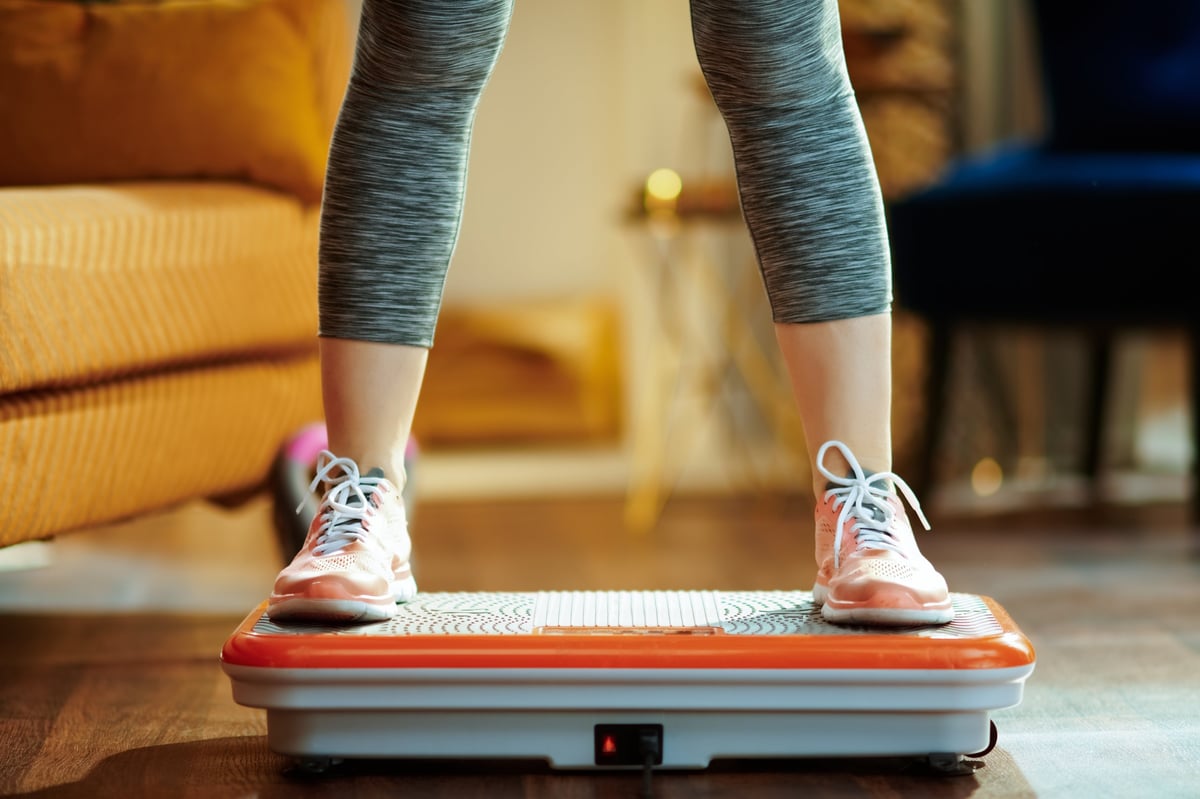
Vibration therapy is generally well tolerated, but it isn't right for everyone, and we screen for this before anyone steps on a platform. If you have balance problems severe enough to risk a fall, we start seated or skip it entirely. If you've had a recent blood clot, joint replacement, or uncontrolled cardiac condition, it needs clearance first.
Reduced sensation is a genuine consideration too. If your feet are numb, you may not feel it if something is uncomfortable. That's precisely why supervision matters — it's not a "buy one and figure it out" treatment.
Vibration therapy is genuinely useful, and it's also not a standalone answer. Circulation is one thread. Nerves that have been damaged also need support in other ways, and the right combination depends on what your exam reveals.
In our clinic, it's commonly paired with red light therapy to support cellular energy and repair, and electric stimulation to calm overactive pain signaling.
Because circulation is such a central factor, it also pairs naturally with leg compression therapy — vibration engages the muscle pump while compression assists venous return, and together they cover both sides of the flow problem. Our article on why compression therapy is one of the best neuropathy treatments goes deeper on that side.
If your symptoms trace partly to a compressed nerve root in the spine, spinal decompression addresses the upstream pinch — otherwise you're improving circulation to a nerve that's still being squeezed.
Let's separate what happens fast from what takes time. Within a session, most patients feel warmth, lightness, and reduced heaviness in their legs. That effect typically lasts a few hours. It's real, it's pleasant, and it's not yet repair.
The changes that accumulate come from consistency. Regular sessions over several weeks help establish better baseline circulation, and that's when patients start reporting that morning tingling is less intense, that they're standing longer without discomfort, or that their balance feels steadier.
Nerves recover slowly, and some damage may not fully reverse. What vibration therapy reliably does is improve the conditions under which your body can do its own healing. That isn't a modest goal — for a lot of patients, it's the difference between gradual decline and measurable improvement.
We are a nerve pain clinic in Southlake, Texas — not a gym with a vibration plate in the corner. That distinction shapes how we use equipment like this. Frequency settings, session length, standing position, and how the platform fits alongside your other treatments are all clinical decisions, made after we understand what's driving your symptoms.
Care is led by Dr. William Greenlee and built on a simple premise: find the actual problem rather than treating a label, combine therapies instead of relying on any single approach, and measure progress honestly so we know when something is working and when it isn't.
You can explore our approach on the neuropathy treatment in Southlake, TX page, or read more about how peripheral neuropathy is evaluated and treated.
A focused evaluation at our Southlake clinic shows us how much of your symptoms trace back to circulation — and how vibration therapy should be sequenced with the rest of your care.
771 Southlake Blvd., Suite 123 · Southlake, TX · Mon–Thu 8AM–6PM
Related pages and articles to help you go deeper.
Full details on the treatment, benefits, and what to expect.
Why compression therapy is central to successful neuropathy care.
How light therapy relieves nerve pain at the cellular level.
Simple daily routines that keep blood flowing to the extremities.
Symptoms, causes, diagnosis, and treatment in Southlake, TX.
Our full range of drug-free options for nerve pain in Southlake.