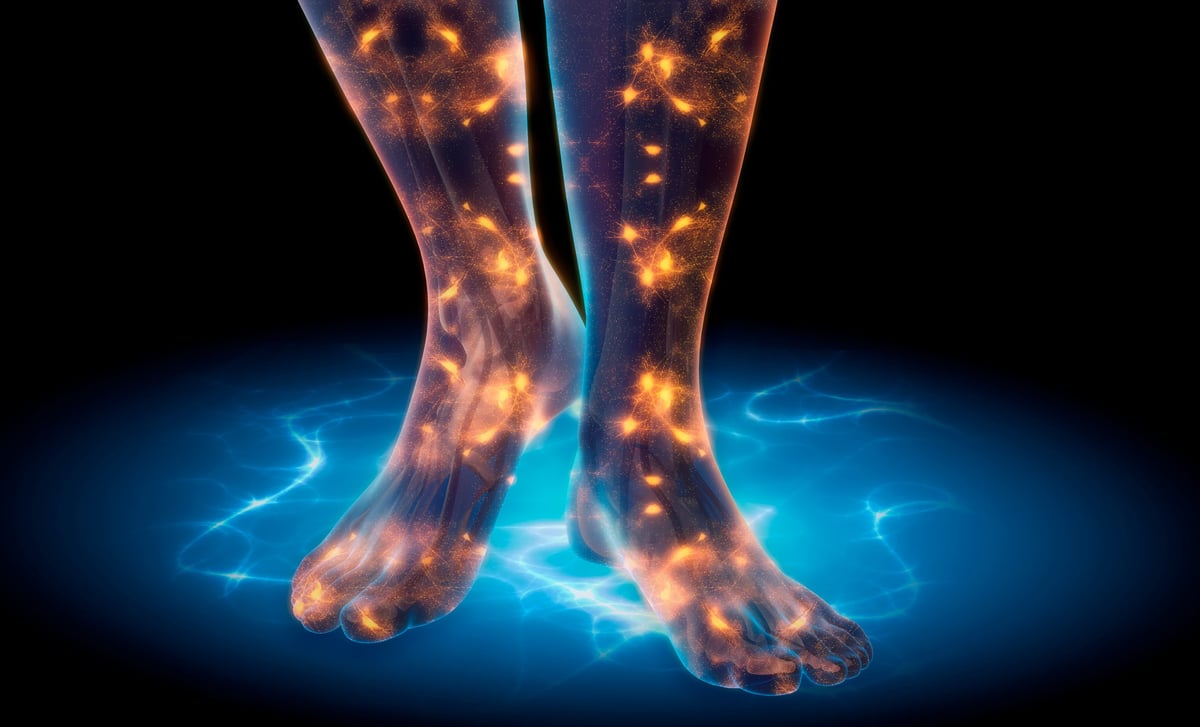
Tingling, numbness, and burning in the feet are often dismissed as normal aging. Learn the early signs that deserve a closer look before symptoms progress.
Dr. William Greenlee
Neuropathy & Nerve Pain Specialist
Most people who walk into our Southlake clinic have a story that starts the same way. Something felt a little off — a buzzing in the toes, a spot on the sole that went quiet, socks that suddenly seemed to have a seam where there wasn't one. Nothing dramatic. So they waited. A few months, maybe a couple of years.
That waiting is the part we wish we could take back for them. Neuropathy tends to move slowly, and it rarely announces itself with pain you can't ignore. It whispers first. By the time the whispers turn into shouting — burning feet at 3 a.m., balance that isn't what it used to be, a stubbed toe you didn't feel — the nerves have often been under stress for a long while.
The good news: nerves are stubborn in the best way. They can recover, especially when you catch the problem early and give them what they need. At our neuropathy treatment center in Southlake, TX, we see this play out often — and it's why we're so insistent about early evaluation. So here are five of the earliest signals we see, and why each one is worth a second look.
It's the classic first clue, and also the one people explain away most often. The pins-and-needles feeling that shows up when your foot has "fallen asleep" is normal — but only if it fades within a minute or two of moving. When that same buzzing sticks around, comes and goes on its own, or creeps up from the toes toward the ankle, that's a signal worth naming out loud. Some patients describe it as carbonation under the skin. Others say it feels like their foot has a heartbeat.
You step on something and only half feel it. The shower water runs hot and your foot registers it as warm. You cut a toenail a little too close and barely notice. Numb feet are easy to live with — right up until they aren't, because numbness is how small injuries turn into stubborn wounds. If you've noticed yourself looking down to confirm what you're stepping on, that's your body asking for attention.
Dinner is over, the shoes are off, you're settling in — and that's when the heat starts. A burning or electric-buzzing sensation in the soles that hits hardest at night is one of the tell-tale patterns of nerve irritation. It's also one of the most disruptive, because poor sleep drains the energy you need to work toward recovery. Patients often tell us they started sleeping with their feet out from under the covers years before they got a diagnosis.
Balance depends on feedback. Tiny nerves in your feet send constant reports to your brain about where you are and what the ground beneath you is doing. When those signals get noisy, you start relying more on your eyes and less on your feet — so you grip the stair rail a little tighter, avoid uneven pavement, or feel unsteady in the dark. It's easy to chalk up to getting older. Sometimes it is. But if it showed up alongside any of the sensations above, it's worth investigating together. Compression of the spine is one cause we check early, which is why spinal decompression therapy so often enters the conversation.
Weakness is a later sign, but it can be subtle at first. A foot that drags ever so slightly. A grip that tires faster than it used to. Cramps in the calves that arrive without warning. Nerves and muscles are a team, and when the nerves lose their edge, the muscles follow. Any change in strength — even a small one — should move you from "wait and see" to "let's get this checked."
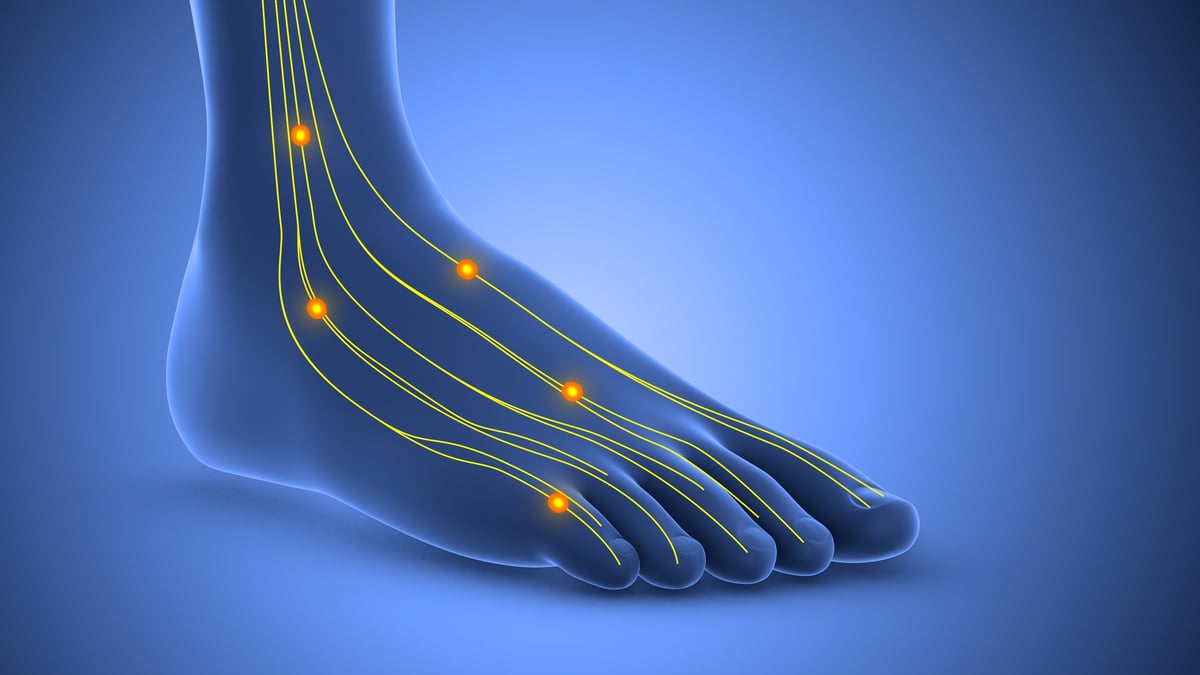
First, don't panic. None of the five signs above means something irreversible is happening. What they mean is that your nerves are asking for help, and help is far more effective when it arrives early. A thorough evaluation looks at the whole picture — circulation, blood sugar, vitamin levels, footwear, spinal alignment, and the habits that fill your days — because neuropathy almost never has just one cause.
Here in our office, we lean on drug-free tools: targeted red light therapy, electric stimulation, spinal decompression, leg compression, and guided movement that wakes up the circulation feeding your nerves. But the plan is always personal. Two people with identical symptoms can need very different paths.
The one thing we've never seen backfire? Catching it early. If any of this sounded familiar, that's your cue — not a reason to wait another season.
Helpful pages related to what you just read.
Our full approach to treating nerve pain in Southlake, TX.
Non-surgical relief for diabetic and peripheral neuropathy.
Relief for disc issues, sciatica, and radiating nerve pain.
Targeted light to support circulation and nerve recovery.
Gentle electrical signals that help wake up quiet nerves.
Dr. William Greenlee and the team behind your care.
A short consultation can tell you a lot. We'll look at the whole picture and build a plan that fits your life — no guesswork, no pressure.